Circulation and filtration
Compare pump speeds, filtration cycles and operating schedules with actual pool use and the limits defined for water quality.
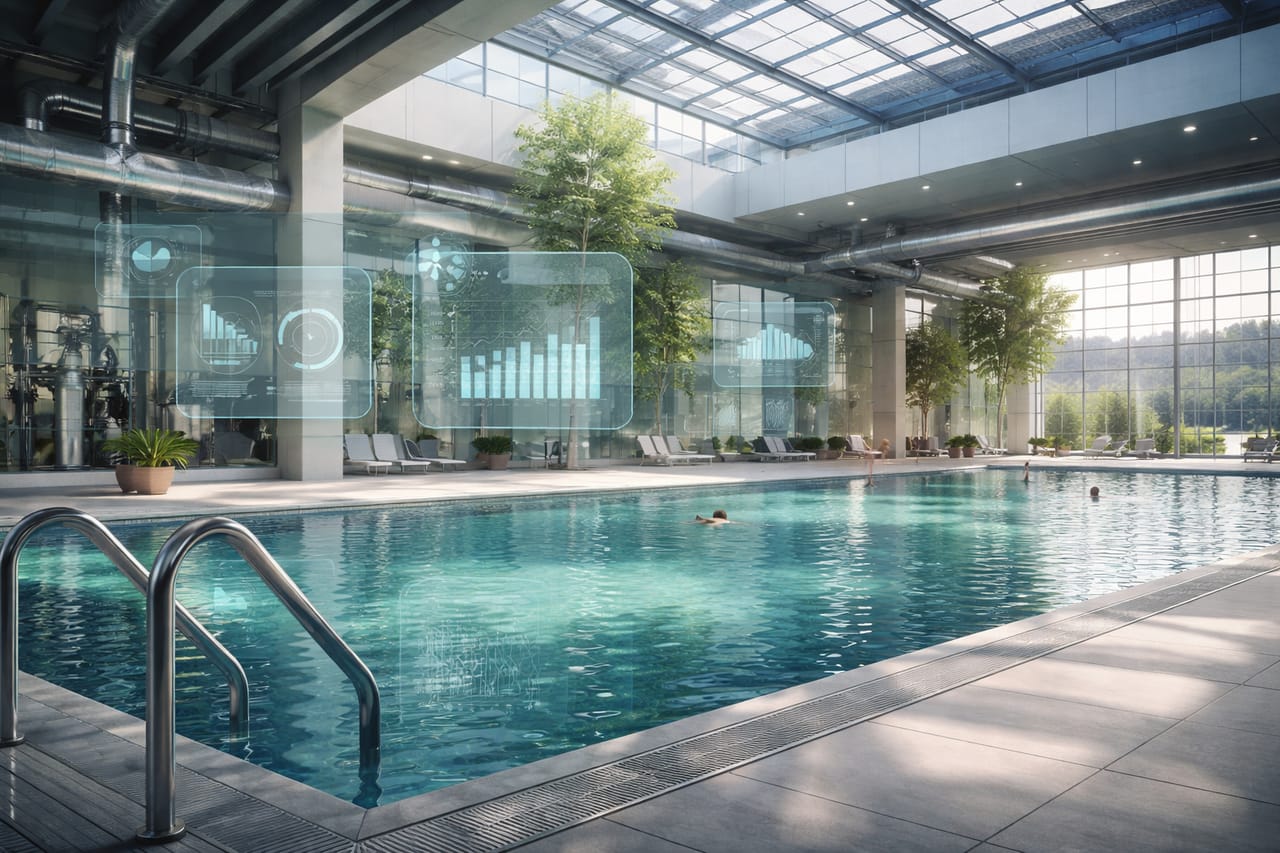
S.P.A.C.E. — Sensing Platform for Automation, Control & Execution
S.P.A.C.E. connects sensors, machines, inverters, PLCs and actuators. Together with Aqutron Vision, it relates plant behavior to occupancy, schedules and actual use of the facility.
It senses physical conditions and acts only within authorized rules. The project first establishes a consumption baseline, then tests where operations can be optimized while keeping water and air quality, hygiene, comfort and safety within agreed limits.
Potential in suitable facilities
Up to 70%
A site-specific range is estimated from the baseline; measured results are verified in the pilot. It is not a guaranteed result.
A pool rarely wastes energy in one place. The study connects operating data with actual demand to identify the changes worth testing.
Compare pump speeds, filtration cycles and operating schedules with actual pool use and the limits defined for water quality.
Examine how thermal and environmental systems respond to occupancy, opening hours and changing conditions.
Identify equipment that continues to run at fixed settings when areas are closed, lightly used or seasonally inactive.
Highlight consumption outside the expected profile and recurring conditions that may justify a technical inspection.
The review can begin with the information already available. Missing measurements are identified before any integration is proposed.
The process separates estimated potential from measured results, so management knows what was tested and under which conditions.
We examine available data, technical scope and the decisions the facility wants to improve.
We define reference consumption, assumptions, missing signals and the areas with the strongest measurable potential.
S.P.A.C.E. monitors the agreed systems and applies only authorized actions, with interlocks, fallback and traceability.
Results are compared with the baseline and acceptance criteria before any wider rollout is considered.
The output is a decision package, not a generic savings promise.
The technical method stays measurable, while the priorities change with the facility.
Evidence for technical teams, management and procurement, with operating limits and responsibilities made explicit.
Assess efficiency while protecting guest comfort, variable occupancy needs and service quality.
Compare recurring patterns, standardize useful indicators and prioritize sites with the clearest opportunity.
Share the facility type, main equipment and available consumption data. We will clarify what can be assessed immediately and what still needs to be measured.